
Featured Artists
Learn about these creators and stories behind our featured public domain works. Discover the legacy of timeless art.
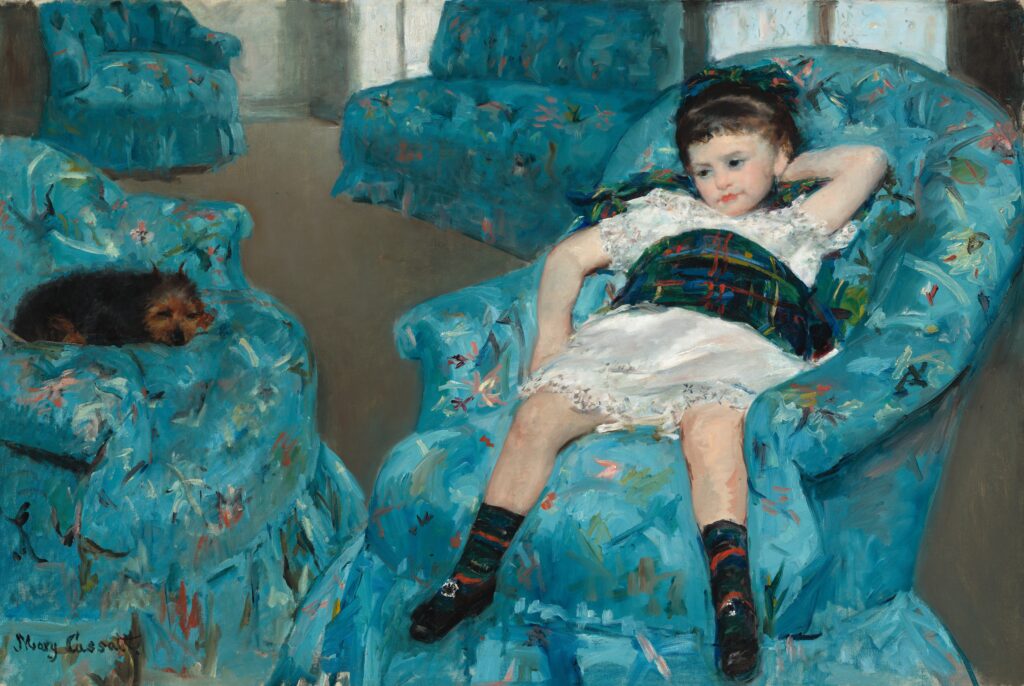
Mary Cassatt
Impressionist Painter
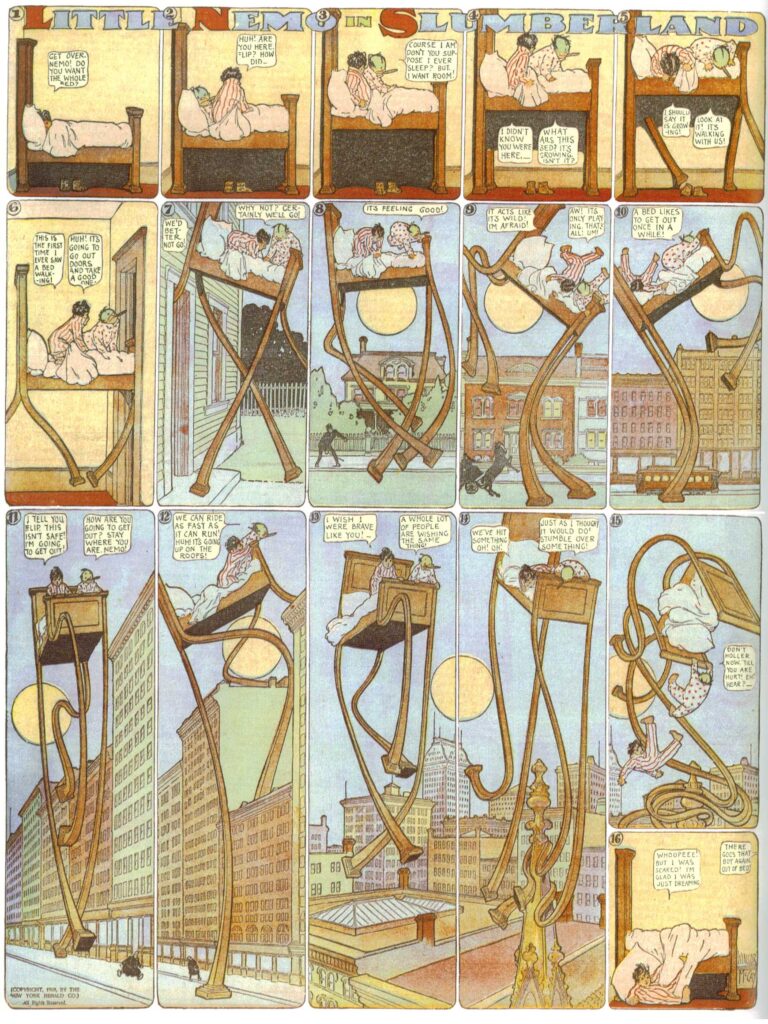
Winsor McCay
Pioneering Cartoonist
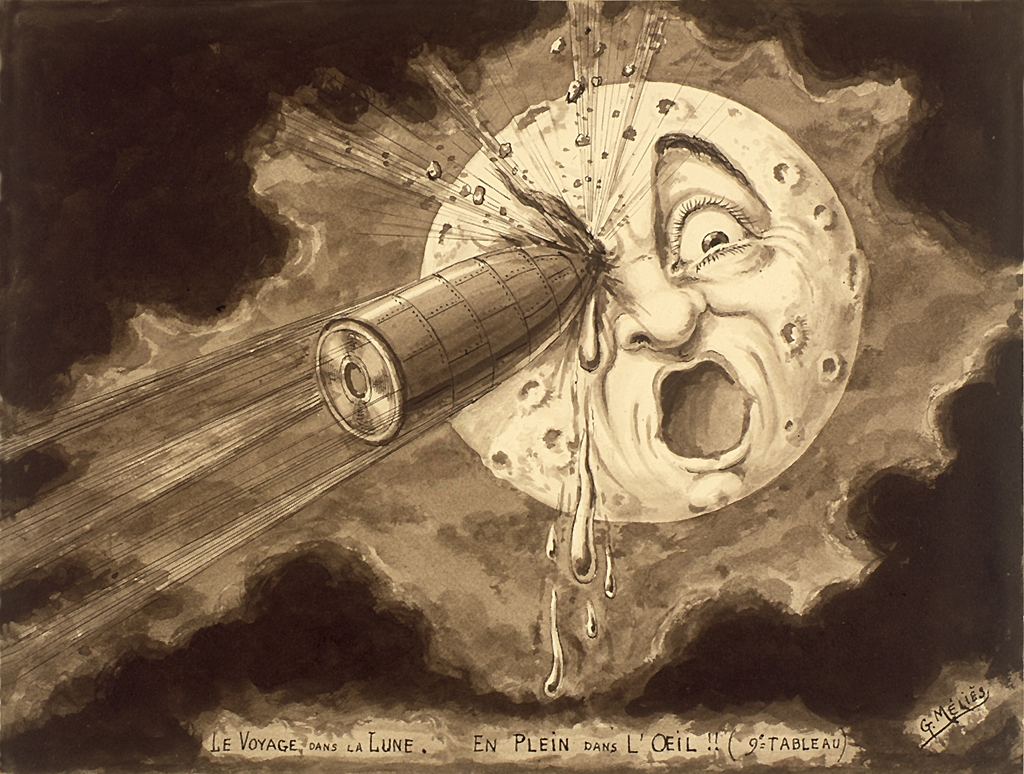
Georges Méliès
Early Filmmaker
Artwork Descriptions
Our gallery features works from artists who revolutionized their fields. Mary Cassatt’s intimate portraits, Winsor McCay’s imaginative cartoons, and Georges Méliès’ magical films have all entered the public domain, allowing new generations to be inspired and create.
Mary Cassatt & The Quiet Power of Little Girl in a Blue Armchair
Step into a sunlit Parisian parlor in 1878. A little girl sprawls across an overstuffed blue armchair, legs in a tangle, expression caught somewhere between boredom and daydream. This is no staged, perfect Victorian portrait — this is Mary Cassatt at her most daring, painting childhood exactly as it is: unpolished, unscripted, and utterly human.
Who Was Mary Cassatt?
Born in Pennsylvania in 1844, Mary Cassatt moved to France to immerse herself in the avant-garde art scene. She soon became the only American painter officially invited to exhibit with the Impressionists, a group that included Monet, Degas, and Renoir. While her peers painted gardens and grand boulevards, Cassatt found her inspiration in the quiet corners of domestic life — particularly the world of women and children.
The Magic of Little Girl in a Blue Armchair
Painted in 1878, Little Girl in a Blue Armchair breaks the rules of traditional portraiture. Instead of prim posture and polite smiles, Cassatt gives us a young girl sprawled sideways, looking as though she’d rather be anywhere else. The oversized blue chairs seem to swallow her whole, their loose brushwork and bold color revealing Cassatt’s Impressionist roots.
The story gets even better — Cassatt painted this work with a little help from her friend Edgar Degas, who is believed to have adjusted the perspective and added the distinctive background. The result is an unflinching, modern take on childhood that still feels fresh today.
Why Cassatt Still Matters
Cassatt’s art was revolutionary not because it shouted, but because it whispered truths that everyone recognized. She brought women’s everyday lives into the fine art spotlight, with intimacy, honesty, and warmth. Today, Little Girl in a Blue Armchair is in the public domain, making it a perfect piece to bring that blend of beauty and realism into your home — on prints, textiles, or any surface that could use a little touch of timeless humanity.
Winsor McCay & the Dazzling World of Little Nemo in Slumberland
Step right into the technicolor dreams of the early 20th century, where skyscrapers bent like licorice sticks, beds galloped across candy-colored landscapes, and the laws of physics took the night off. Welcome to the world of Winsor McCay — the man who made comics float, twist, and dance like nothing readers had ever seen before.
Who Was Winsor McCay?
Born in 1869, Winsor McCay was an American cartoonist, illustrator, and pioneering animator. In an era when most comic strips were simple, black-and-white gag panels, McCay’s work exploded off the page — lavishly colored, intricately detailed, and brimming with imagination.
McCay’s artistic career began in the bustling world of newspaper illustration, but his restless creativity soon led him to invent entire universes. By 1905, he introduced the strip that would make him a legend: Little Nemo in Slumberland.
The Magic of Little Nemo
Imagine a bedtime story where anything could happen — and it did. In Little Nemo, young Nemo drifts into Slumberland each week, encountering giants, princesses, walking bedframes, and bizarre landscapes that could have been dreamt up by both a child and an architect. The strip always ended the same way: Nemo waking up in his bed, the surreal adventure vanishing into morning light.
The July 26, 1908 panels — now in the public domain — showcase McCay’s mastery: towering perspectives, vivid colors, and that whimsical blend of humor and awe. His style was so ahead of its time that even today, over a century later, these panels feel like a visual treat fresh from the printing press.
Why McCay Still Matters
Beyond his comic work, McCay was also a pioneer of animation. His 1914 film Gertie the Dinosaur is considered one of the earliest animated films with a defined character personality. In both print and film, McCay’s meticulous linework and storytelling charm shaped the future of visual art.
Georges Méliès & The Whimsical Wonder of Le Voyage dans la Lune (1902)
It’s 1902 in Paris. Film is still a novelty — short, grainy clips of trains arriving at stations or workers leaving factories. Then along comes Georges Méliès with an entirely new vision: a rocket ship slamming into the man in the moon’s eye, followed by a whimsical lunar adventure. Cinema would never be the same.
Who Was Georges Méliès?
Born in 1861, Méliès was a Parisian stage magician turned filmmaker, fascinated by the possibilities of moving pictures. At a time when most thought film was just a scientific curiosity, Méliès saw it as a playground for the imagination. He built his own glass-walled studio, created elaborate sets, and pioneered special effects like multiple exposures, dissolves, and stop-motion substitution.
The Magic of Le Voyage dans la Lune
Inspired by Jules Verne’s From the Earth to the Moon and H.G. Wells’ The First Men in the Moon, Le Voyage dans la Lune (A Trip to the Moon) was the world’s first science-fiction film. In just over 14 minutes, it takes viewers from a raucous meeting of astronomers to a fantastical lunar landscape, complete with moon creatures, giant mushrooms, and a dramatic escape back to Earth.
The film’s most famous image — the moon’s face grimacing with a rocket stuck in its eye — is pure Méliès: humorous, surreal, and unforgettable.
Why Méliès Still Matters
Georges Méliès proved that film could be more than a record of reality — it could be a canvas for dreams. His techniques laid the groundwork for modern visual effects, from Hollywood blockbusters to indie experiments. Today, Le Voyage dans la Lune is in the public domain, and its imagery remains instantly recognizable. Perfect for prints, apparel, or even as the centerpiece of a retro home cinema theme, it’s a reminder that storytelling magic doesn’t need CGI to sparkle.